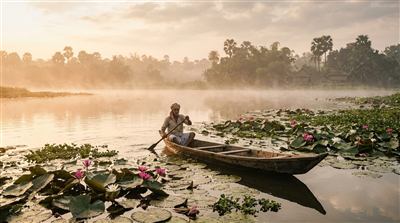
1. Bihar’s Aquatic Terroir: Nature’s Sustainable Sanctuary
At a time when modern industrial agriculture is challenged by soil depletion, excessive groundwater pumping, and chemical pesticide runoff, Makhana farming in North Bihar stands out as a model of ecological harmony and zero-waste sustainability.
2. How Makhana Cultivation Preserves Freshwater Wetlands
- Zero Artificial Irrigation: Makhana grows naturally in monsoon-fed natural lakes, perennial oxbow ponds, and shallow river tributaries, consuming zero deep-bore underground water.
- Aquatic Carbon Sequestration: The expansive floating leaves of Euryale Ferox (which can reach over 1.5 meters in diameter) absorb atmospheric CO2 while generating rich aquatic biomass that enriches the pond bed ecosystem.
- Natural Integrated Multi-Trophic Aquaculture: Traditional farmers cultivate air-breathing local fish species (like Singhi, Magur, and Rohu) alongside makhana, creating a self-sustaining aquatic polyculture system where fish waste naturally fertilizes the aquatic plants.
3. Empowering the Mallah Harvesting Community
The harvesting of fox nuts is deeply intertwined with the heritage of Bihar's Mallah community. By partnering directly with farmer producer organizations (FPOs), Bihari Makhana Enterprise ensures fair-trade gate prices, eliminates exploitative middlemen, and provides modern protective diving gear and educational support for harvesters' families.