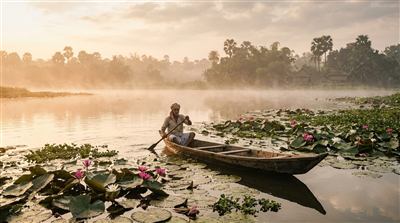
The Perfect Regenerative Agriculture Model
Modern intensive farming often leads to soil monoculture and water depletion. In sharp contrast, integrated Makhana-cum-Fish Farming in North Bihar represents one of the world's most elegant examples of closed-loop circular agriculture.
Ecological Synergy in Nature's Sanctuary
- Thermal Canopy Protection: Broad floating leaves of Euryale Ferox shield shallow wetland waters from scorching summer heat, keeping pond temperatures ideal for indigenous air-breathing fish (Singhi, Magur, Rohu, and Katla).
- Natural Nutrient Recycling: Fish excretion enriches pond silt with natural organic nitrogen and phosphorus, eliminating any need for chemical synthetic fertilizers.
- Biological Pest Control: Aquatic fingerlings feed on water bugs and weed larvae, rendering chemical pesticide sprays completely obsolete in authentic GI-tagged Mithila wetland cultivation.